
Smart HVAC & Indoor Air Quality for Saskatoon Businesses
Half the building is too hot, the other half wears coats, and nobody can tell you what the air is actually doing. KeenAI installs monitoring and controls that measure a building honestly first — then fix what the measurements show.
- Measured, not guessed
- Saskatoon & Regina
- Works with your existing plant
Thermostat wars are a measurement problemNot a personality problem
Every building has the corner office that bakes and the meeting room that freezes, and every building has someone who gets blamed for it. Almost always the real cause is that nobody has ever measured the place: one sensor by the door is deciding the temperature for a floor with six different solar exposures, and the air handler is running to a schedule set by whoever commissioned it years ago.
The same is true of air. Carbon dioxide climbs through a morning in a full meeting room and takes concentration with it. Humidity swings hard between a prairie winter and summer. None of it is visible, so none of it gets fixed — and buildings end up buying equipment to solve problems they have never actually characterised.
What we install
Zone monitoring
Temperature and humidity sensors in the zones people actually complain about, logged over time, so a comfort argument becomes a chart instead of an opinion.
Air quality sensing
Carbon dioxide, fine particulate and volatile organic compounds measured continuously in meeting rooms, classrooms, gyms and open floors — the spaces where occupancy swings hardest.
Scheduling and setback
Heating and cooling that follow how the building is actually occupied instead of a fixed timetable, including holidays, shift patterns and the weeks a space sits empty.
Demand-based ventilation
Where the plant allows it, ventilation driven by measured carbon dioxide rather than running flat out all day — better air when the room is full, less waste when it is not.
Alerting that reaches a person
Freeze risk, plant failure and out-of-range conditions sent to whoever is actually on call — because the expensive HVAC failure is the one that happens on a long weekend.
One dashboard, several buildings
Multiple sites in one view with per-person logins, so a facilities manager is not signing into four different systems to answer one question.
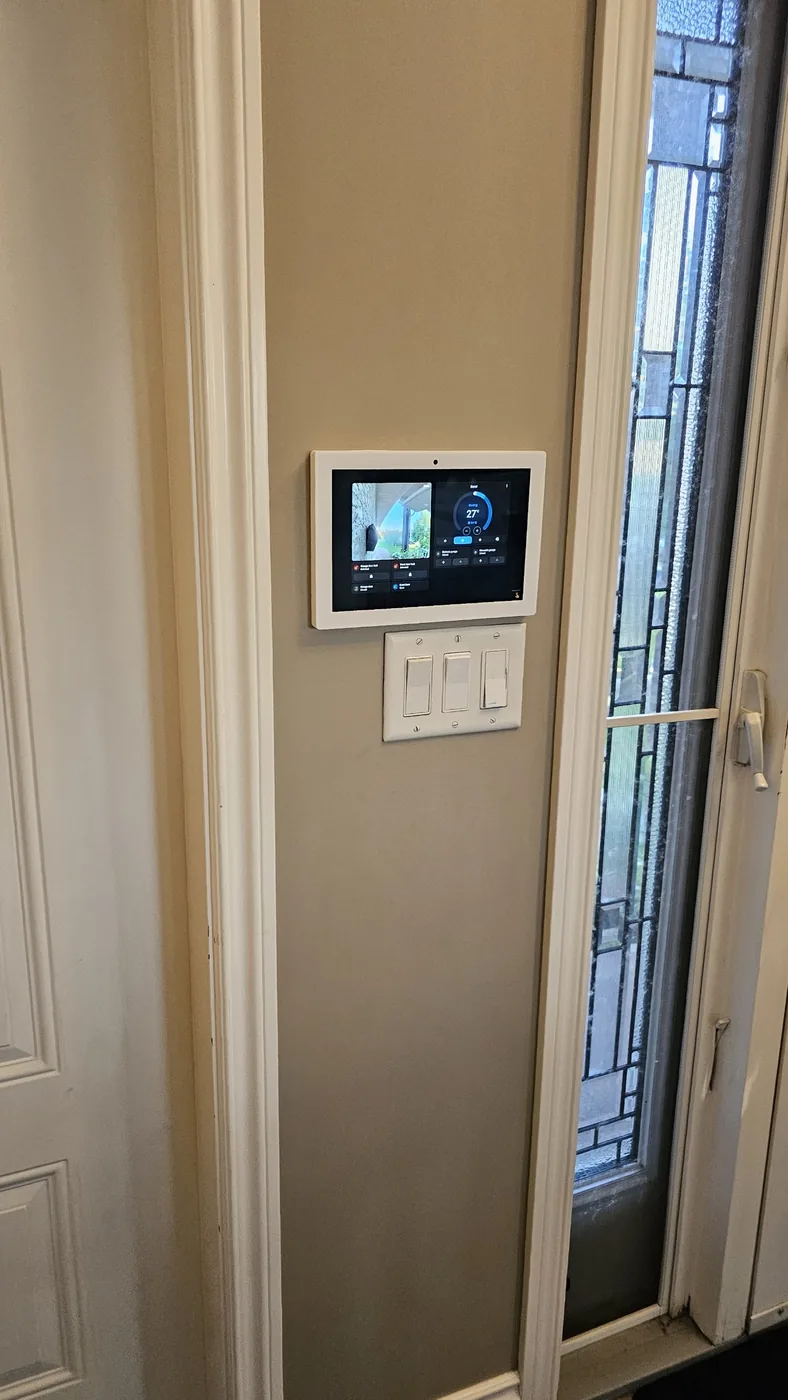
A number on a wall beats an argument
A control panel from one of our installs showing the actual indoor temperature rather than a setpoint somebody typed in years ago. Whatever the building, the first useful step is the same: put the real measurement somewhere a human can see it.
What we will not tell youBecause we cannot know it yet
We will not open with a percentage you will save. Anyone who quotes you an energy saving before measuring your building is guessing, and the number exists to close the sale rather than to describe your plant, your envelope, your occupancy or your winter.
What we will do is measure first, show you what the building is actually doing, and be specific about which of those things controls can fix and which need mechanical work by an HVAC contractor. Sometimes the honest recommendation is that your money belongs in balancing or a damper repair rather than in anything we sell.
The equipment we work with
We build on open, widely supported controls and sensing rather than a proprietary building system that ties you to one dealer for the life of the equipment. In practice that means the platform we use integrates with more than 1,500 device integrations, so existing thermostats, rooftop units, sensors and meters can usually be brought into one view rather than replaced.
Where your building already runs a manufacturer’s system and it is working, we will say so — the useful project is often adding measurement and alerting around it, not tearing it out.
Who this is for
Offices and professional suites, retail units, warehouses with occupied office space, clinics and care facilities, gyms and studios, schools and community buildings, and property managers running several sites at once.
How a job runs
Free building assessment
We walk the building with whoever fields the complaints, look at the plant and existing controls, and identify the zones and rooms worth instrumenting first.
Measure before changing anything
Sensors go in and log for a period long enough to see the pattern — a full week at minimum, and through a weekend, because the empty building tells you as much as the full one.
Review the data together
You see what the building actually does. The fixes get prioritised by what the measurements show, not by what is easiest to sell.
Automate and hand over
Schedules, setbacks and alerting configured against the real occupancy, with your team shown how to read the dashboard and change a schedule without calling us.
Serving Saskatoon, Regina and across Saskatchewan
KeenAI is locally owned in Saskatoon and works throughout the surrounding communities including Warman and Martensville. For commercial projects we travel — Regina and other Saskatchewan centres are within our normal working area, and we will consider work further afield in Alberta where the project justifies it. Ask before you spend anything and we will give you a straight answer about travel.
Frequently asked questions
What is a good CO2 level for an office or classroom?
Outdoor air sits around 400 ppm, and indoor readings are commonly interpreted against that baseline: values close to outdoor suggest generous ventilation, while readings climbing well above roughly 1,000 ppm indicate a space where ventilation is not keeping pace with the number of people in it. The value of measuring is seeing when and where your building crosses that line, because it is almost always a specific room at a specific time rather than the whole building all day.
Can smart HVAC controls work with the equipment we already have?
Usually. Most commercial plant can be monitored and scheduled without replacement, and the platform we build on supports more than 1,500 device integrations, so existing thermostats, sensors and meters are typically brought into one view. Equipment that genuinely cannot be integrated is identified at the assessment, before anything is ordered.
How much will this save on our energy bill?
We will not put a number on that before measuring your building, and we would treat any figure quoted before a site visit as a sales device rather than an estimate. Savings depend on your plant, your building envelope, your occupancy pattern and your winter. Measurement comes first; the honest projection comes after.
Do you replace our building management system?
Not usually. Where a BMS exists and works, the useful project is normally adding measurement, alerting and a clearer view around it. Ripping out working plant controls is expensive and rarely the thing that fixes the complaint you actually called about.
What about air quality in a building sealed for winter?
This is exactly where measurement earns its place. A building tightened against a prairie winter trades heat loss for air exchange, so carbon dioxide and humidity behave very differently in January than in June. Both are straightforward to manage once you can see them, and guesswork until you can.
Can you monitor several buildings at once?
Yes. Multiple sites can sit in a single dashboard with individual logins per person, so access can be granted and revoked as staff change and a facilities manager answers a question in one place rather than four.
Stop arguing about the thermostat. Measure the building.
A free building assessment tells you which zones are worth instrumenting and what a first phase would cost — with no savings percentage invented before anyone has looked at your plant.
Commercial leak detection · Security cameras · Climate control for homes